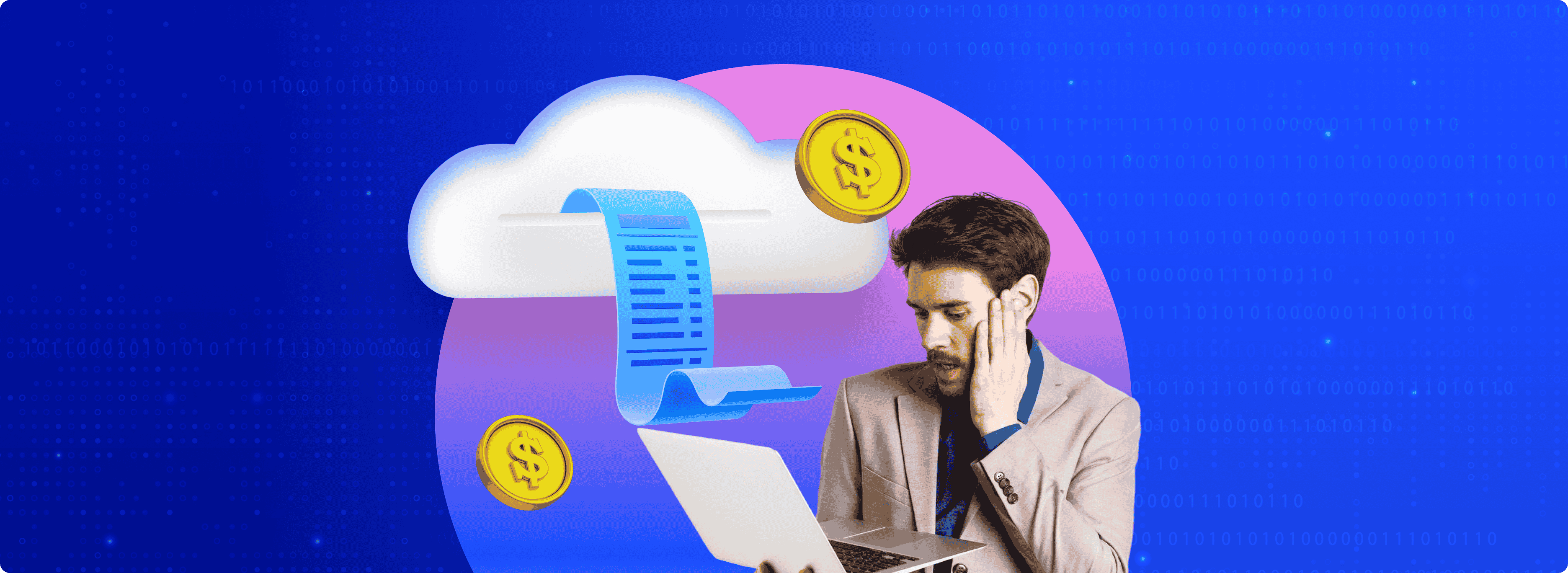



We were closely working with a product team and they rolled out a change to improve reliability. The deployment was successful, and they also saw jump in the overall website traffic. A few weeks later, the bill lands on their desk
The Finance team was handling the cloud expenses and they didn’t know what a NAT Gateway is. The CFO asked them what changed. No one can point to a single decision or owner.
Their team explained the situation to us, and we knew exactly how common it is. When you try to scale infrastructure, costs naturally start climbing due to technical choices made across engineering, data, and product teams. The problem is, most organizations review cloud spending only after the money is gone. That’s just inefficient
In this blog we are going to walk you through the 5 Pillars of Cloud Cost Governance, the difference between a lean, profitable operation and one that drains its budget on infrastructure. By the end, we’ll also look at how Costimizer bridges this gap, helping you move from simply understanding the problem to actually fixing it.
So, let's get started.
60-Second Summary
The Core Problem: 94% of IT leaders struggle to optimize cloud costs because technical decisions are disconnected from financial accountability.
The Fix: Cloud Cost Governance is not about spending less. It is about ensuring every dollar spent has a clear owner and a business purpose.
Key Pillars:
The Result: You stop treating cloud bills as a tax and start treating them as an investment.
Cloud Cost Governance is the operating model that defines who gets to spend money, how they decide to spend it, and who is responsible when the bill arrives.
It exists to control how cloud spend happens, not just how much is spent.
According to the FinOps Foundation's 2025 State of the Cloud Report, Optimization remains the #1 priority for organizations for the second year in a row. Yet, Crayon reports that 94% of IT leaders still struggle to control their cloud costs.
Why the disconnect? Because most companies confuse Management with Governance.
Feature | Cloud Cost Management | Cloud Cost Governance |
Focus | Execution & Action | Strategy & Accountability |
Action | Resize this EC2 instance. | Who is allowed to launch an x1.32xlarge? |
Timing | Reactive (After the bill) | Proactive (Before the resource exists) |
Owner | DevOps / FinOps Team | Engineering Leadership + Finance |
Goal | Culture change |
Governance ensures that when you do use a cloud analytics platform, the data actually leads to a decision.
Think of your company like a restaurant kitchen.
Without governance, you rely on after-the-fact reviews. Costs are discussed only after they have occurred, when options are limited. With governance, spending becomes intentional.
But be careful. Do not confuse this with Cloud Security Governance.
You can have the most secure fort in the world (Security Governance), but if it costs a billion dollars to heat it because someone left the windows open (Cost Governance), you still lose.
The first pillar is the most painful one. You need to answer the question: Who owns this resource?
We see the same pattern every year. Ownership is the missing link. Organizations where engineering teams share responsibility for cloud costs are likely to survive. Organizations where Finance owns the cloud cost are likely to fail.
Why? Because Finance cannot terminate an EC2 instance. They don't know what it does.
89% of engineers say that lack of cloud cost visibility impacts their ability to do their job.
The Shared Responsibility Trap A lot of companies say, We have a shared responsibility model. In my experience, Shared Responsibility usually means No Responsibility. If everyone owns the bill, no one owns the bill.
The problem starts with the Tragedy of the Commons. When resources are communal, no one has an incentive to optimize them. I once consulted for a company where they had a massive database cluster costing $15,000 a month. I asked, Who uses this? Three different teams raised their hands. I asked, Who pays for this? They all put their hands down.
How to Fix It: The No Tag, No Server Policy You need to move to a model where every single resource,every bucket, every instance, every load balancer,has a name attached to it. Not a team name like DevOps, but a specific service owner or product owner.
If an engineer knows that their name is on the server that is costing $500 a day, they treat it differently. They treat it like their own money. If they think it's just The Company's Cloud, they treat it like an open bar.
The Rule: If a resource has no owner, it gets deleted in 30 days. No exceptions.
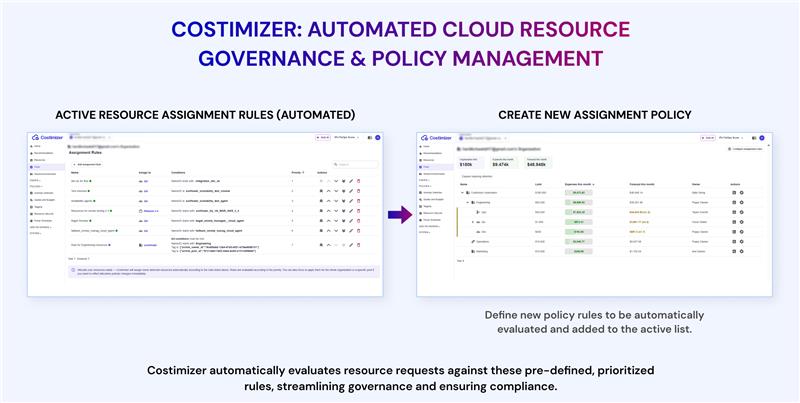
Or, you can automate the pain away. Use assignment rules to instantly map resources to owners without forcing engineers to manually tag every single server.
Okay, so we know who owns the resource. But who allowed them to create it in the first place?
Cloud cost governance must clearly define who is allowed to make spending decisions and within what boundaries. This is about Decision Rights.
In a physical office, if you want to buy a $5,000 espresso machine, you probably need approval from a Manager and maybe Finance. You have to fill out a form. It takes a week.
In the cloud, a junior developer can write three lines of Terraform code and provision a cluster of GPU instances that costs $5,000 per hour. And they can do it in 30 seconds without asking anyone.
The Permission Hierarchy You need to establish tiers of freedom. This isn't about slowing people down; it's about matching risk to authority.
The cloud is about how you do computing, not where you do computing. , Paul Maritz, Former CEO of VMware
The Psychological Aspect: Gatekeepers vs. Guardrails Nobody likes a Gatekeeper who says No to everything. But everyone likes a Guardrail that prevents them from driving off a cliff. Frame these decision rights as protection for the engineers. We are restricting access to x1.32xlarge instances not because we don't trust you, but because mistakes happen, and a mistake here costs $20,000.
The Action Item: Review your IAM (Identity and Access Management) roles. Does the intern really need permission to provision expensive services? Probably not. Remove the right to spend massive amounts from people who don't have the context to justify it. Use power scheduling policies to ensure that even if they do launch something, it turns off automatically at night.
If cloud costs cannot be tied to owners, services, or products, governance cannot function. This is Pillar 3.
Most cloud bills look like a grocery receipt where everything is just labeled Food - $50,000. You need a receipt that says:
The Shared Cost Nightmare The hardest part of this is shared resources. Things like Kubernetes clusters or shared Databases. If five teams use one cluster, who pays for it? Usually, companies just dump this into a Shared IT bucket. That is lazy governance.
You need to use Unit Economics. You need to figure out how to slice that shared cost based on actual usage,CPU cycles, memory requests, or API calls.
Why This Matters for Margins: If you don't attribute costs, you don't know your margins. I once worked with a SaaS company that thought their Enterprise Plan was their most profitable product. When we actually attributed the cloud costs properly using cost allocation, we realized that the Enterprise customers were using so much storage that the product was actually losing money. They were subsidizing their biggest clients.
Without attribution, you are flying blind. You might be cutting costs on a feature that drives 80% of your revenue, while ignoring a background job that generates zero value but costs $5k a month.
The KPI: Cost Per X Governance reaches maturity when you stop tracking Total Cloud Spend and start tracking Unit Cost.
If your total cloud bill goes up by 50%, but your Cost per Customer goes down by 10%, that is a good thing. It means you are scaling efficiently. If you don't have attribution, you can't see this distinction.
Governance relies on guardrails that shape behavior before spend escalates.
Budgets vs. Alerts Most people set up a budget alert that says: Email me when we spend 100% of the budget. By the time you get that email, it is too late. You have already overspent. It’s like getting a notification from your bank that you are overdrawn after the check bounced.
Effective governance uses Forecasting and Anomaly Detection. You want an alert that says: Hey, based on the last 6 hours of traffic, you are going to hit 120% of your budget in 3 days. Fix it now.
The Policy of The Stick Policies are the rules of the road.
When guardrails are missing, organizations rely on post-hoc analysis. By then, the money is gone. It’s a sunk cost. You can't get a refund from AWS because you didn't mean to.
Automated Remediation The best governance is invisible. Instead of emailing an engineer to Please resize this instance, use tools that do it automatically.
Use multi-cloud monitoring to enforce these policies across AWS, Azure, and GCP simultaneously. You don't want a policy that only works on one cloud and leaves the others vulnerable.
Finally, none of this works if you are doing it in Excel.
Cloud cost governance depends on timely, accurate data. You cannot govern a dynamic, auto-scaling infrastructure using a static spreadsheet that you update once a month.
The Problem with Native Tools AWS Cost Explorer or Azure Cost Management are fine for basic checks. But they are designed to show you what you spent. They are historical. They are not designed to help you strictly govern the future. They are receipts, not controls.
FinOps teams are stretched thin , investment is climbing... organizations are turning to end-to-end platforms. , J.R. Storment, Executive Director, FinOps Foundation
Enter the Platform Approach You need a tool that brings billing, usage, and operational data into one place. You need a platform that connects the Dollar Sign to the Line of Code.
This is where Costimizer comes in.
We realized that governance breaks down when ownership, measurement, and action live in separate places. Finance has the invoices. Engineering has the monitoring tools (Datadog/New Relic). Product has the roadmap.
Costimizer bridges this gap.
We built Costimizer because we hated the Weeks later conversation. We wanted to give Engineering teams the data they need to make smart decisions before the Finance team knocks on the door.
Before we wrap up, let's clarify something. A lot of people confuse Cloud Governance with what we are doing here.
Cloud Governance covers security, access control, compliance (GDPR, SOC2), and architectural standards. Its purpose is to ensure systems are safe and reliable. Cloud Cost Governance is a financial discipline.
These two often coexist, but they are not interchangeable. An organization can have robust security controls (Governance) and still bleed money because no one is watching the instance sizes (Cost Governance).
At Costimizer, we believe Cost Governance deserves the same rigor as Security. You wouldn't leave your firewall open. Why would you leave your wallet open?
By adopting cloud applications cost governance budgeting best practices, organizations can align spending with business value and achieve FinOps confidence
So, how do you actually implement this? Do you need to hire a team of consultants? No. Here is a practical roadmap.
So, when will you implement Cloud Cost Governance? I guess you will now.
If you don't control your cloud, your cloud controls your runway. A lot of leaders think that high cloud bills are just the price of scale. That is false. High cloud bills are usually the price of laziness and lack of governance.
If the product is great, governance is just efficiency. If the product is poor, governance is survival.
We built Costimizer to be the operating system for this governance. It takes the 5 Pillars we discussed and automates them. It ensures ownership is clear, decisions are data-driven, and costs are measured against business value.
Don't let the fear of bureaucracy stop you. Governance isn't about red tape; it's about clarity.
Anyway, that brings us to the end of this blog. I hope you learned something new, and I'll catch you in the next one.
Not exactly. FinOps is the culture and the practice. Cloud Cost Governance is the framework and the rules that enable FinOps. Governance extends beyond the FinOps team,it involves Engineering leadership, Product, and the C-Suite defining the rules of the game.
Absolutely. In fact, it is more relevant. A large enterprise can absorb a $10,000 mistake. A seed-stage startup cannot. Implementing governance early (like simple tagging and budget alerts) prevents the technical debt
of cost from accumulating. It is much harder to fix governance when you have 500 engineers than when you have 5. Check out our guide on cloud computing examples to see how small teams scale effectively.
Costimizer provides the data that justifies the decision. If an engineer wants to launch a large cluster, they can use Costimizer's forecasting to show leadership: This will cost $X, but it will support $Y in new revenue. It moves the conversation from Can I have money? to Here is the ROI of this investment.
The principles are identical, but the tools differ. Azure uses Management Groups and Blueprints for governance; AWS uses Organizations and Service Control Policies (SCPs). If you are multi-cloud, you need a unified layer like Costimizer to manage both. Read our Azure vs AWS comparison for more details.
Start by looking for Zombie Resources,unattached volumes, idle load balancers, and old snapshots. These are the easiest wins. Read our guide on cloud cost-saving mistakes to avoid common pitfalls.
You can, but it takes more human effort. For AWS cost reduction or Azure cost optimization, native tools are often not giving you the solution, and it will often make it harder for you to track who spent what. Costimizer is a platform which pays for itself by catching anomalies faster than a human can refresh a dashboard.
The biggest blocker is usually cultural resistance. Engineers feel like they are being policed. That is why we emphasize attribution over restriction. Don't tell them they can't spend money. Tell them, You can spend money, but everyone will know it's your money. Transparency usually solves the problem without the need for policing.
•
CTO•
Articles