Here's how you can utilize Kubernetes Cost Optimization to get granular visibility into container spend and eliminate waste at the workload level.
Kubernetes pricing is a black box, until now. Costimizer cracks it open and gives you a single source of truth across all clusters, from EKS and GKE to self-managed environments. Track exactly where every dollar flows: from top-level cluster spend down to an individual pod or microservice, giving teams deeper visibility for effective eks cost optimization. This is the cost-per-pod visibility that cloud provider native tools cannot deliver.
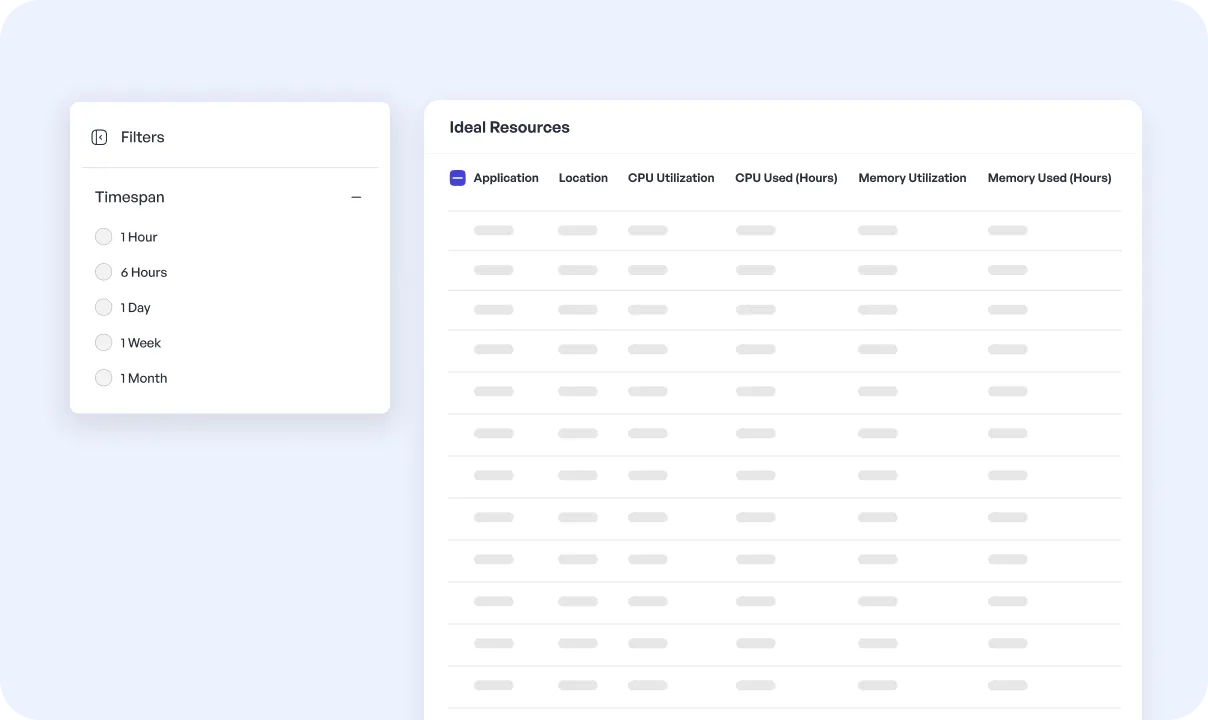
Unallocated costs bring about a culture of no responsibility. Our system will allow you to trace back any cent of Kubernetes spend to the team, product, or feature that created it. This enables your engineering teams to own their costs and allows your practice to adopt FinOps.
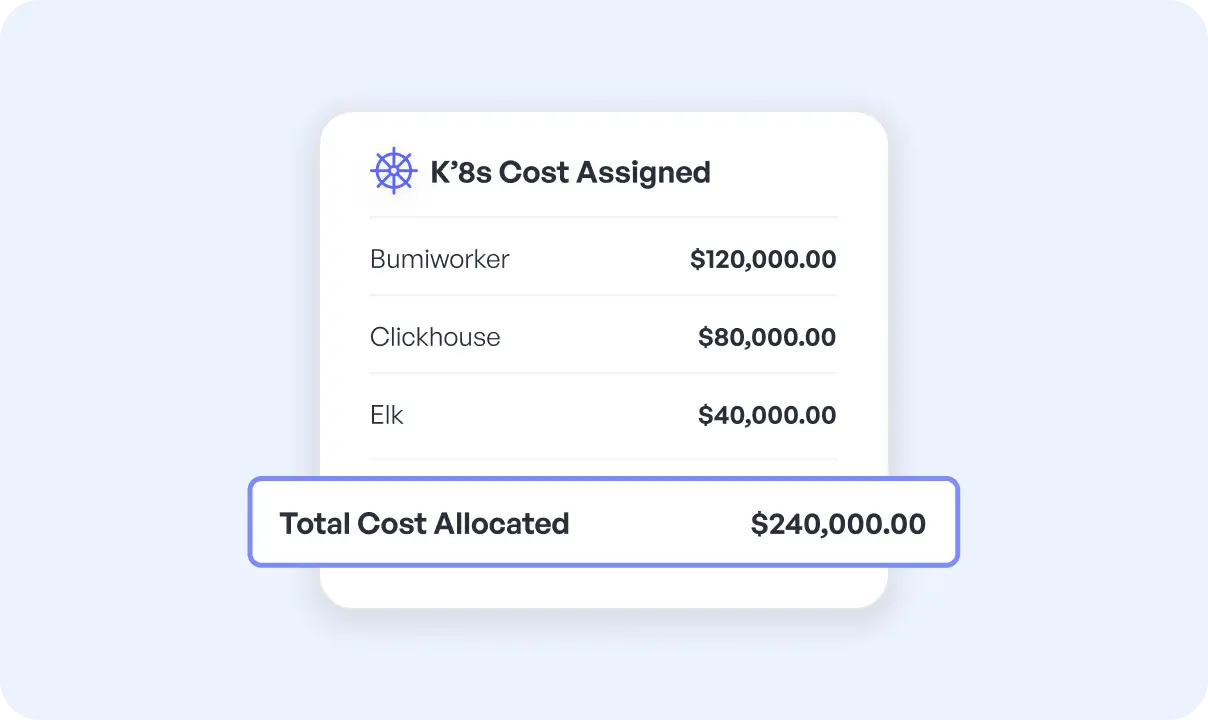
Blindly cutting resource requests causes latency spikes and application crashes. Modern CTOs wants to understand cost per pod, cost per microservice, and cost per team. Our platform delivers exactly that: data-driven recommendations that balance cost savings with performance, so you eliminate waste without sacrificing reliability.
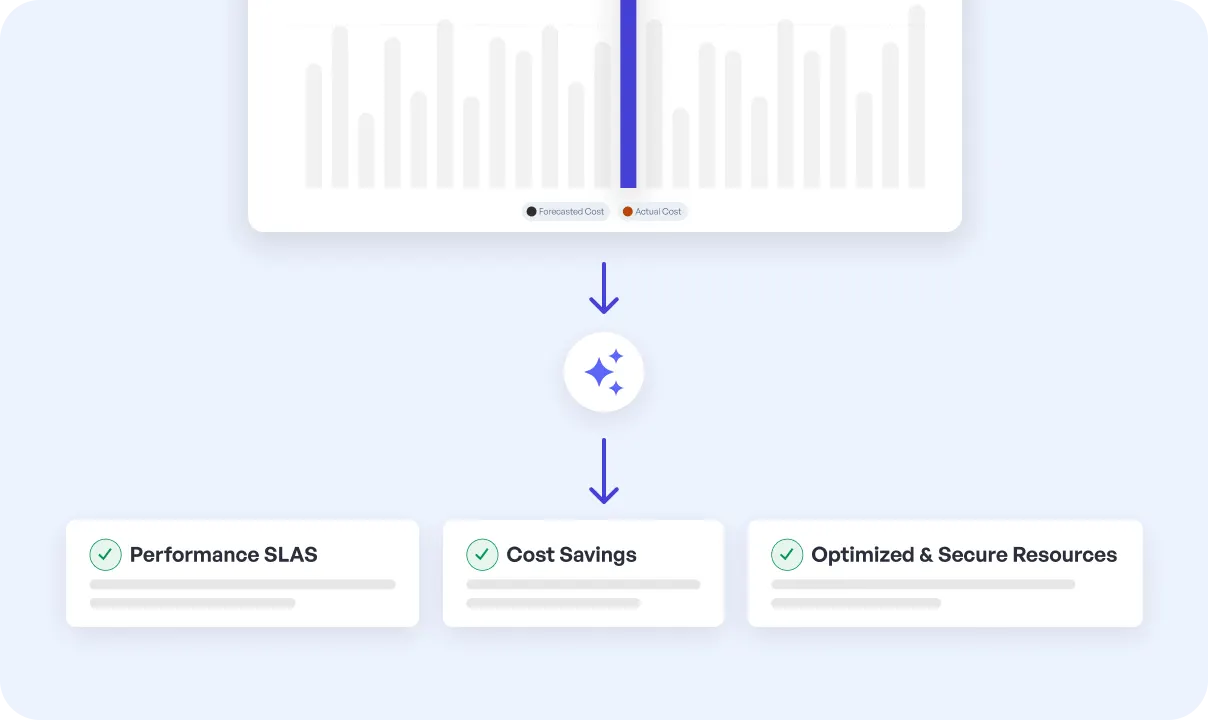
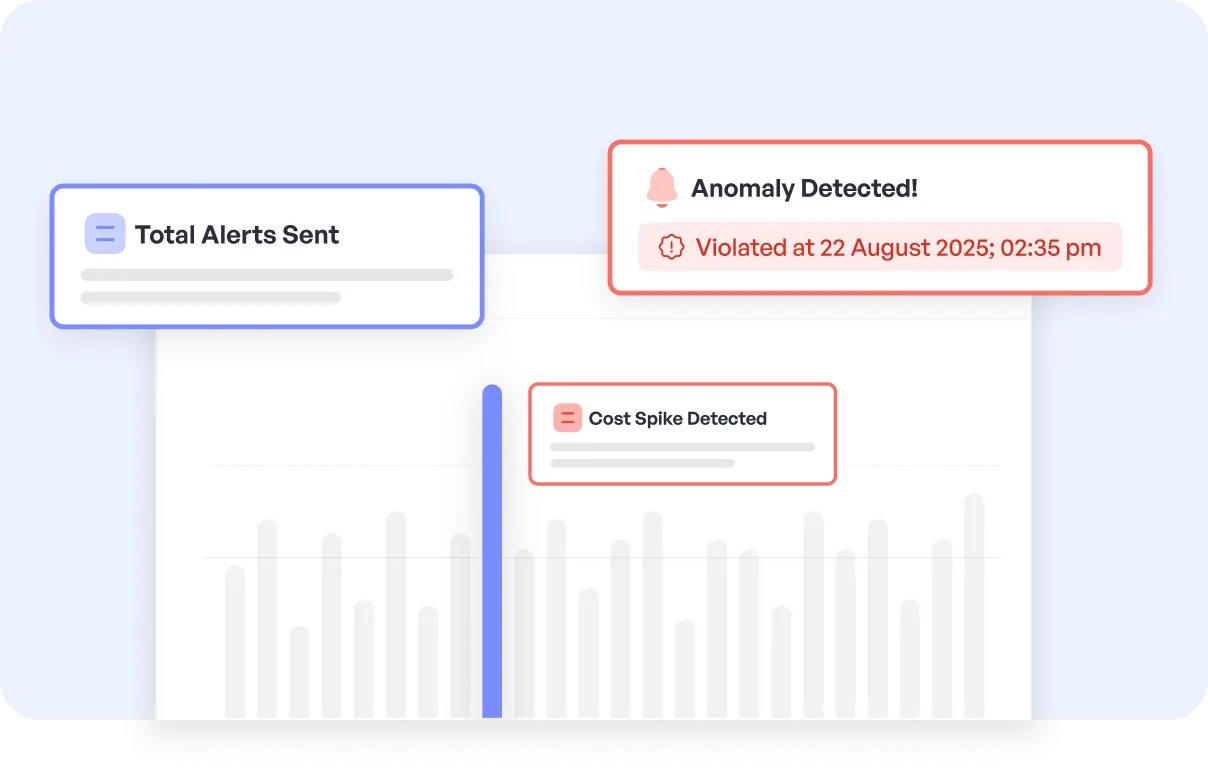
Costimizer moves you from reactive monitoring to proactive cost management with real-time anomaly detection, spend alerts, and multi-cloud Kubernetes egress optimization, a major cost driver that most monitoring tools ignore entirely.
Most Kubernetes cost tools stop at reporting and leave the implementation to your team. Costimizer closes the loop between recommendation and action. Here is the exact three-step workflow our AI agent runs, continuously, in the background.
Step 1: Scan: Deep-Dive Pod and Namespace Level Spend
Costimizer ingests your cluster metrics and maps every dollar to the pod, namespace, workload, label, team, or microservice responsible. No black boxes. No unallocated spend. You get complete Kubernetes cost visibility, even with imperfect or missing tags.
Step 2: Simulate: Predict the Impact Before You Commit
Before any change is made, our platform simulates the cost and performance impact. Run what-if scenarios for Spot Instance migration, predictive bin packing, or Karpenter vs. Cluster Autoscaler configuration changes. See the projected savings and risk profile, then decide.
Step 3: Execute: Agentic AI Performs the Scale-Down
When you are ready, Costimizer executes. Our AI agent performs right-sizing, node consolidation, and idle resource cleanup with zero-downtime transitions. No manual kubectl commands. No engineering hours burned on cost ops. Just a smaller bill and a faster cluster.
Most Kubernetes cost tools, including Kubecost and several cast ai alternatives, give you excellent data but leave the fixes to your team. Costimizer is built differently. Here is how the two approaches compare:
Feature | Passive Reporting Tools (e.g. Kubecost) | Costimizer (Agentic Execution) |
Cost Visibility | Yes- dashboards and reports | Yes- pod-level, namespace, team, microservice |
Rightsizing Recommendations | Yes- manual review required | Yes- AI-generated, performance-validated |
Automated Execution | No- engineers implement manually | Yes- agentic AI executes with zero downtime |
Predictive Bin Packing | No | Yes- simulates impact before committing |
Karpenter / Cluster Autoscaler Support | Limited | Yes- compatibility with both, with simulation |
Multi-Cloud Egress Optimization | Rarely covered | Yes- K8s egress mapped and optimized |
Unit Economics (Cost per Pod) | No | Yes- cost per pod, microservice, namespace |
Tag-Free Cost Allocation | Partial | Yes- 100% allocation without labels |
See real-time spend across AWS, Azure, GCP, and more, with up to 95%-accurate forecasts, AI-prioritized recommendations, automated policy enforcement, and step-by-step actions that typically cut cloud costs 20-40%.
From high-growth startups to global enterprises, leaders choose Costimizer to turn their cloud operations into a source of efficiency and innovation.