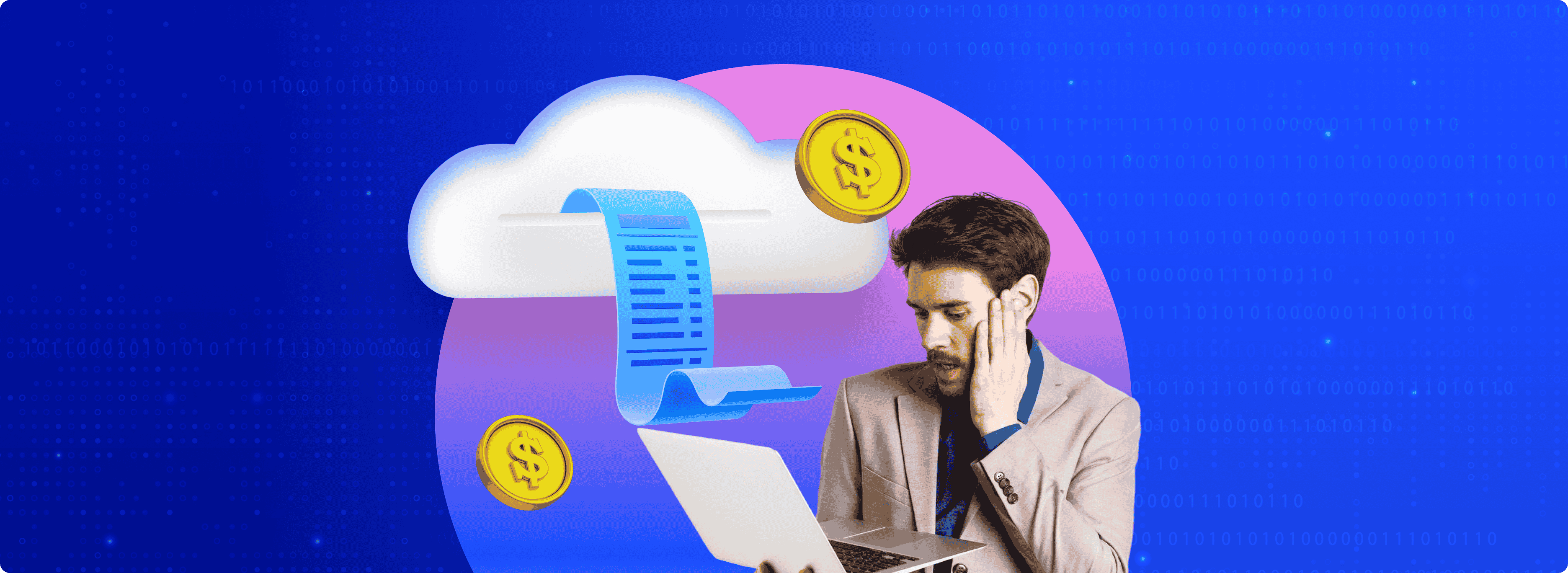


You know, without a well-structured cloud FinOps framework, companies usually overspend by up to 30% due to idle resources and inefficient architecture.
To save you the effort, in this guide, I’ll walk you through every part of the FinOps framework: what it is, how it works, where companies get stuck, what changed in 2026, and what your team can do to save that 30%.
Key Takeaways:
The shift to cloud computing changed the physics of IT procurement. In the past, buying a server required a formal request, budget approval, and physical installation. This process was slow. The slowness acted as a natural budget control.
Today, a junior developer can provision a high-powered database in just three seconds.
Understanding the FinOps framework requires understanding how purchasing has changed. The table below outlines the core differences.
Feature | Traditional IT Cost Management | Cloud FinOps |
Purchasing Model | Capital Expenditure (CapEx). Buying physical hardware upfront. | Operating Expenditure (OpEx). Paying for resources by the minute or second. |
Budgeting | Fixed annual budgets. Costs are highly predictable. | Variable spending. Costs fluctuate based on customer traffic and engineering choices. |
Cost Ownership | Centralized. The IT procurement team manages all vendor contracts. | Decentralized. Engineers make technical decisions that immediately incur financial costs. |
Review Cycle | Quarterly or annual reviews. | Real-time or daily reviews using automated reporting. |
Optimization Focus | Negotiating hardware discounts with vendors. | Rightsizing active resources and turning off idle environments automatically. |
A recent industry survey revealed that 82% of companies report higher cloud bills than they originally planned. Overspending is rarely caused by actual customer growth. It is caused by operational inefficiency.
Business leaders face specific pain points when managing cloud infrastructure.
A user on Reddit expressed frustration perfectly: "AWS Cost Explorer shows you the number but doesn't tell you that specific dev instance has been idle for 3 weeks.
Implementing a proper framework solves these operational gaps.
Unit Economics Visibility: FinOps translates technical usage into business metrics. Instead of asking, "Why is our AWS bill $50,000?", you can ask, "What is the exact cloud cost to support one active customer?" If your customer acquisition cost is lower than your lifetime value, an increasing cloud bill is acceptable. It indicates growth.
Faster Innovation with Safety: Engineers no longer have to wait weeks for budget approvals. FinOps establishes financial guardrails. Developers can build freely within those guardrails. If a new deployment causes a sudden cost spike, automated anomaly detection catches it in minutes.
Gross Margin Alignment: Every dollar wasted on an oversized database is a dollar subtracted directly from your EBITDA. The FinOps framework forces teams to treat financial efficiency as a core metric of code quality.
The FinOps Framework is the operating model for finOps cloud cost optimization, providing a standardized approach for organizations to track, analyze, and optimize cloud spending.. It was created by the FinOps Foundation, a project hosted by the Linux Foundation.
It provides a standardized approach for organizations to track, analyze, and optimize cloud spending. The framework is not a software tool. But a set of rules. It dictates how human beings should communicate about cloud architecture.
It consists of principles, phases, maturity levels, domains, and specific stakeholder personas.
The FinOps Foundation outlines six guiding principles. These act as the fundamental rules for any organization trying to control technology spending.
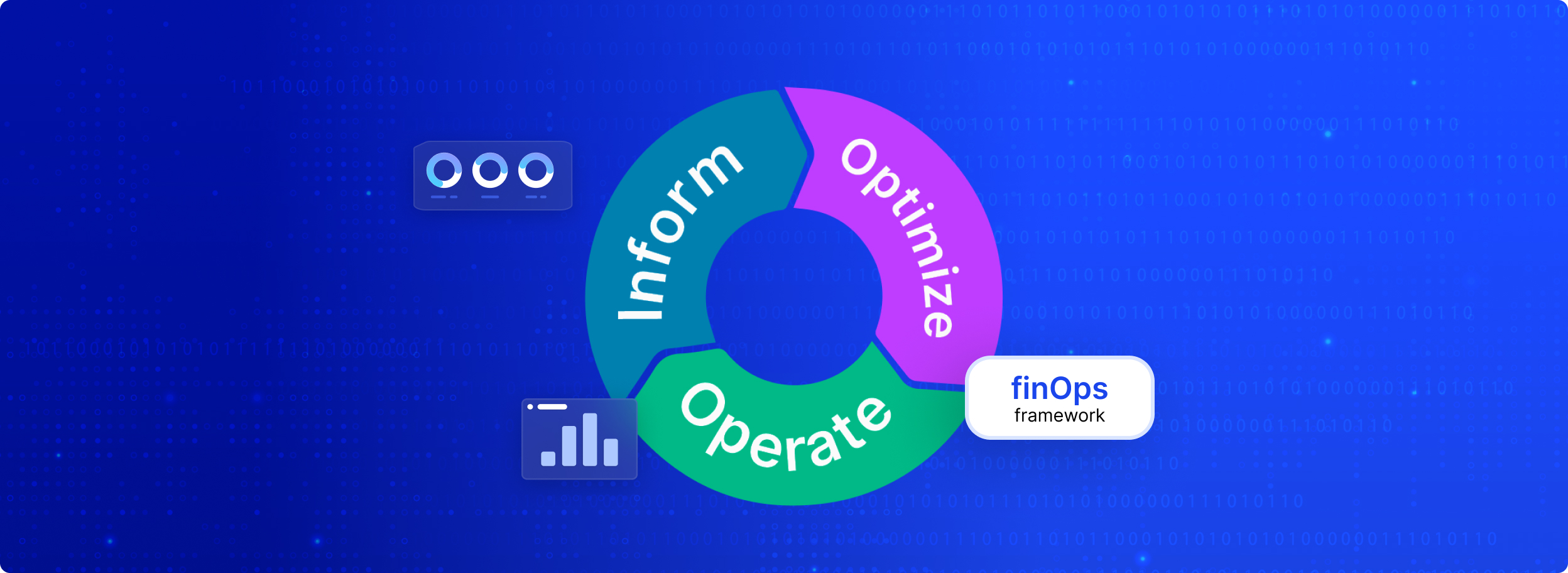
FinOps is not a one-time project. It is a continuous loop. The framework organizes this loop into three specific phases.
You cannot manage what you cannot see. The Inform phase focuses entirely on data visibility.
In this phase, you establish a tagging strategy. A tag is a digital label attached to a cloud resource. You might tag a server with "Department: Marketing" or "Project: MobileApp." Accurate tagging allows the finance team to practice "showback" or "chargeback." Showback involves showing specific departments exactly how much they spent. Chargeback involves actually billing those departments for their usage.
Without complete visibility, teams fall victim to the "lift-and-shift" trap. They migrate massive, outdated databases to the cloud without resizing them. The Inform phase highlights these expensive oversights immediately.
Once you can see the data, you must reduce waste. Optimization occurs in two separate ways.
Rate Optimization
This involves paying less for the resources you use. Cloud providers offer heavy discounts if you commit to using a specific amount of compute power over one or three years. These are called Reserved Instances or Savings Plans. The centralized FinOps team typically handles this.
Usage Optimization
This involves using fewer resources. Engineering teams handle this. Examples include:
The Operate phase focuses on building automated processes. Human beings cannot manually monitor cloud infrastructure 24 hours a day.
During this phase, organizations implement automated policies.
For example, you can write a script that automatically shuts down all development servers at 7:00 PM on Friday and turns them back on at 8:00 AM on Monday.
This phase also involves integrating cost anomaly detection. If a coding error causes a database to consume excessive memory, an automated alert notifies the engineering team via Slack within 5 minutes.
Organizations do not achieve perfect cloud efficiency overnight, which is why the FinOps maturity model helps teams progress systematically.. The framework uses a "Crawl, Walk, Run" maturity model to help teams progress realistically, which is part of the broader FinOps maturity model used to scale cloud efficiency.
Crawl Phase
The organization is reactive. Teams rely on basic cloud provider dashboards. Cost allocation is poor because tagging policies are inconsistent. The focus is primarily on understanding the monthly bill and stopping obvious waste.
Walk Phase
The organization builds reliable processes. Tagging compliance reaches 80% or higher. Finance teams can accurately forecast next month's cloud bill. The company begins purchasing Reserved Instances to lower compute rates.
Run Phase
The organization achieves high automation. Machine learning models predict cost anomalies before they impact the budget. Engineering teams use automated rightsizing tools. Unit economics are perfectly tracked.
Many companies struggle to move past the Walk phase. Here is why?
The 2026 framework organizes FinOps activities into specific Domains. These domains represent spheres of knowledge.
Capabilities are the specific functional tasks performed within these domains. For example, "Anomaly Management" is a specific capability within the "Understanding Usage and Cost" domain.
Successful implementation requires distinct groups to change their behavior. The framework defines specific personas.
Finance Teams
They need predictable budgets. They use FinOps data to build accurate forecasts. They track cloud spending against revenue to ensure the company maintains healthy gross margins.
Engineering and Operations (SRE/DevOps)
These teams build the actual software. They need systems that run quickly and reliably. Under FinOps, they must also ensure their code runs cost-effectively. They execute the rightsizing recommendations.
Product Managers
They decide what features to build. FinOps helps them understand the infrastructure cost of a new feature. If a new video-upload feature costs $10,000 a month in storage, the product manager must determine if users are willing to pay for it.
Executives (CEO, CTO)
They provide the strategic mandate. They ensure the company balances innovation speed with financial control.
The FinOps Specialist acts as the bridge. They translate technical server metrics into financial language for the CFO. They translate budget constraints into technical rules for the engineering team.
Do not attempt to implement every framework capability at once. Attempting a massive, multi-year transformation program usually results in failure. You must start small.
CTO and Founding GB Member of the FinOps Foundation, Mike Fuller, emphasized this pragmatic approach at the 2024 FinOps Foundation event, stating that you do not need to use every part of the framework immediately. Start with basic allocation and reporting.
You need specific numbers to measure success. Track these three Key Performance Indicators (KPIs) early on:
The discipline of cloud financial management changes rapidly. The FinOps Foundation recently introduced several major updates to the framework.
Technology Business Management (TBM) looks at technology spending from the top down. It organizes annual budgets and cost categories. IT Asset Management (ITAM) tracks software licenses and hardware.
FinOps operates from the bottom up. It monitors daily cloud usage, instance spikes, and server rightsizing. In 2026, these disciplines are converging. FinOps provides the granular, real-time data that traditional TBM frameworks previously lacked.
Historically, AWS, Microsoft Azure, and Google Cloud Platform (GCP) used entirely different billing formats. Analyzing costs across multiple providers required massive manual effort.
The Linux Foundation introduced FOCUS to solve this. FOCUS 1.1 is an open-source specification that standardizes billing data. It forces cloud providers and Software-as-a-Service (SaaS) vendors to produce consistent, unified billing datasets. This makes multi-cloud cost management significantly easier.
The framework recently introduced "Scopes." A scope is a defined segment of technology spending. FinOps is no longer just for public cloud (AWS, Azure, GCP). Scopes now include SaaS, Data Centers, and AI workloads.
Furthermore, the 2026 summit placed heavy emphasis on Executive Strategy Alignment. FinOps teams are no longer just cutting waste; they are actively working with the C-suite to improve gross margins and free up capital to fund new Gen AI initiatives.
Agentic AI is shifting FinOps from a reporting function to an execution function.
Previously, FinOps tools analyzed data and sent a report to an engineer, who then had to manually log in and resize a server. Agentic AI tools now integrate directly into the environment. They analyze the workload, determine the optimal server size, ask for approval via a chat interface, and safely execute the change themselves. This significantly reduces the manual workload on engineering teams.
To execute this effectively, most teams rely on 2026 best FinOps tools for automation, visibility, and continuous optimization.
Every major provider offers free, native tools. AWS offers Cost Explorer. Microsoft Azure provides Azure Cost Management. Google Cloud offers Cloud Billing.
These native tools are excellent for the "Crawl" phase. They provide basic visibility and budgeting. However, they have severe limitations. They only show data for their specific platform. Furthermore, they are passive. They report the cost but do not automatically fix the underlying engineering issue.
When a business reaches the "Walk" or "Run" phase, they require third-party platforms. Enterprises with multi-cloud environments or heavy Kubernetes usage need specialized software.
This is where legacy tools fall short and modern platforms excel. Traditional third-party tools create excellent charts, but they still require an engineer to log in, read the chart, and manually delete a server.
The Solution for Modern Enterprises
You need a system that actively prevents waste. Costimizer is an Agentic AI platform built specifically for this purpose.
Costimizer acts as an autonomous FinOps engineer. It natively supports AWS, Azure, GCP, and Kubernetes. The platform provides:
Instead of having your engineers spend hours tagging resources and reading billing CSVs, Costimizer automates the entire governance process.
Unmanaged cloud infrastructure drains capital directly from your profit margins. The FinOps framework solves this by forcing finance and engineering teams to share accountability. By moving through the Inform, Optimize, and Operate phases, your business can transform cloud computing from an unpredictable expense into a manageable, strategic asset.
If your cloud bills feel unpredictable, it is time to move past manual dashboards. Use Costimizer.ai today to connect your cloud accounts in 60 seconds, uncover hidden waste, and let Agentic AI automatically secure your gross margins.
Most organizations identify 10% to 15% of immediate cloud waste within the first 30 days just by establishing basic visibility. Automated savings and continuous financial returns typically compound by month three as your team enforces automated guardrails.
Costimizer is designed to pay for itself multiple times over. We offer a zero-risk guarantee: if our platform does not identify more savings than the cost of your subscription, your first month is completely on us.
No, proper FinOps actually speeds up innovation. By setting up automated financial guardrails and budgets, engineers can provision resources instantly without waiting for manual finance approvals.
Absolutely not. You are in complete control and can set Costimizer to a "recommend-only" mode where your team approves every action. Once you trust the platform, you can allow it to automate low-risk tasks, such as orphaned storage cleanup.
Yes. Purchasing RIs only lowers your servers' hourly rate, but it does not prevent engineers from leaving oversized or unused resources running. FinOps ensures you optimize your actual usage alongside those discounted rates so you never pay for idle capacity.
Yes, Costimizer is built to act as an autonomous FinOps engineer for your company. It handles the heavy lifting of finding waste, allocating costs, and executing rightsizing, making it the perfect fit for lean startups and busy CloudOps groups. Nonetheless, we have internal FinOps experts always ready to help.
Native tools like AWS Cost Explorer are great for basic reporting, but they are entirely passive and single-cloud focused. To actually stop budget overruns, you need an active system that catches anomalies instantly and executes fixes across AWS, Azure, and GCP.
Zero engineering heavy-lifting is required. Costimizer connects to your cloud accounts in about 60 seconds via secure, read-only access, enabling you to generate your first cost-saving report instantly.
•
CTO•
Articles