

The situation is precisely this: most organizations treat Amazon RDS like a utility bill.
Wrong.
RDS is a variable cost system. When unoptimized, you're running an expensive, inefficient operation. For contrast, when managed correctly, every dollar spent correlates directly to business value. This blog provides the framework to make that shift.
60 Second Summary
Key takeaway: Reducing RDS costs is less about cutting usage and more about making informed configuration and governance decisions.
The most significant lever for lowering RDS costs is the underlying processor architecture. Most legacy environments still run on x86-based instances (Intel or AMD) simply because that’s how it’s always been done. This results in a competence tax: you pay a premium for older, less efficient processing power.
AWS Graviton processors (Graviton 3 and 4) are custom-built for the cloud. For engines like Postgre SQL, MySQL, or MariaDB, staying on legacy x86 is a rational failure.
Identify your databases with the highest CPU utilization first. Moving a production cluster to a Graviton-based instance is a structural improvement that lowers your cost basis permanently. It is a core step in any guide to reduce AWS cost.
Historically, AWS tied storage performance (IOPS) to storage capacity. If you wanted a faster database, you had to buy more disk space, even if you didn't need it. This created rotting inventory: paid-for capacity that served no purpose.
The transition to GP3 volumes is the most effective quick win for 2026. It allows you to set your IOPS and Throughput independently from the total storage size.
Decoupling performance from capacity ensures you stop paying for storage you don't use while keeping the speed you need. Understanding these nuances is key to managing your cloud bills.
There is a common misconception that Serverless always equals Savings. In a rational cost audit, this is often proven false.
Aurora Serverless v2 is great for unpredictable, spiky workloads. However, for a steady production database, it can become an expensive liability.
At Costimizer, we help you identify where Serverless is actually costing you a premium. If your database never hits its minimum capacity, you are overpaying for flexibility you don't use.
Data hoarding is a primary driver of RDS cost creep. Organizations often create Manual Snapshots during updates and never delete them. These act like rotting inventory in a warehouse, taking up space and incurring daily fees without providing any value.
Manual snapshots do not expire on their own. Unlike automated backups, they stay on your bill until a human deletes them.
By cleaning out your Snapshot Graveyard, you reclaim capital that can be reinvested into better compute power. This is a critical part of cloud cost governance.
If you run MySQL 5.7 or PostgreSQL 11 past their AWS standard support end dates, you pay Extended Support fees per vCPU per hour on top of normal instance costs. These charges accumulate silently and appear as a line item most engineers do not immediately recognize. Upgrading your engine version to a currently supported release eliminates this cost entirely. It takes planning, but the savings are immediate and permanent once the migration completes.
Technical competence is the only cure for high cloud costs. Many companies suffer from Brain Drain; their best engineers spend hours on manual cost audits instead of building new features.
Costimizer automates the refinery work of cloud optimization.
Most RDS reports are opaque. You see a total number, but you don't see the Cost per Tenant or Cost per Project. Costimizer provides the intelligence needed to:
By layering this intelligence over your infrastructure, you move RDS from an expense to a strategic asset. You can finally view your database spend as a clear business metric, as seen in our AWS cost management solution.
Most RDS cost problems aren’t technical, they’re visibility problems that also make it harder to reduce amazon EC2 cost across cloud environments
AWS shows you totals. Businesses need meaning.
Without tooling, teams can’t easily see:
Costimizer acts as an intelligence layer over your infrastructure by:
This stops brain drain, where senior engineers manually audit costs instead of building products.
With clarity, RDS becomes a measurable business asset, not an uncontrollable expense.
Most teams run their RDS databases on On-Demand pricing by default. This is the most expensive way to run a production database. For stable workloads with predictable usage, committing to a Reserved Instance (RI) or a Database Savings Plan delivers the single highest discount available in RDS cost optimization.
Reserved Instances offer up to 69% off On-Demand pricing for stable production databases on a 3-year all-upfront commitment. Even a 1-year RI cuts costs by up to 42%. Database Savings Plans, introduced in recent AWS updates, provide flexible coverage across multiple RDS engine types without locking you into a specific instance family. See our full breakdown in the committed use discounts guide.
Option | Max Discount | Best For |
Reserved Instances (1yr) | Up to 42% | Stable, predictable production DBs |
Reserved Instances (3yr all-upfront) | Up to 69% | Long-term, high-confidence production workloads |
Database Savings Plans | Up to 60% | Multi-service RDS coverage with flexibility |
The right choice depends on your workload stability. If your production database runs at consistent capacity for 12 or more months, an RI pays for itself quickly. If you run multiple engine types or expect to change instance families, a Database Savings Plan gives you the discount with more flexibility. In most environments, combining both delivers the lowest possible cost floor.
Multi-AZ deployment doubles your RDS instance cost by running a synchronous standby in a second Availability Zone. For production databases, this is a smart reliability investment. For development, test, and staging environments, it is pure waste.
Run this audit in five minutes: go to the RDS console, filter instances by environment tag, and identify any dev or test databases with Multi-AZ enabled. Disabling Multi-AZ on non-production instances cuts those instance costs in half immediately. This is one of the fastest, lowest-risk changes you can make with zero impact on your production reliability.
Non-production databases run 24 hours a day, 7 days a week by default. Your developers are not using them at 3AM. You are still paying full price for every hour they sit idle.
Implementing an automatic stop/start schedule on dev, test, and staging databases cuts their cost by 65% or more with no change to how your team works. Costimizer's cloud power schedule policy automates this across all your non-production environments with a single rule. It is one of the highest-return changes in this guide and takes less than ten minutes to configure.
For managed RDS engines, the risk is minimal. Compatibility for PostgreSQL and MySQL is nearly 100%. The savings usually cover the engineering time in less than two months.
Other usually includes Data Transfer fees and Snapshot storage. If you are moving data across different regions or hoarding old backups, this category will explode.
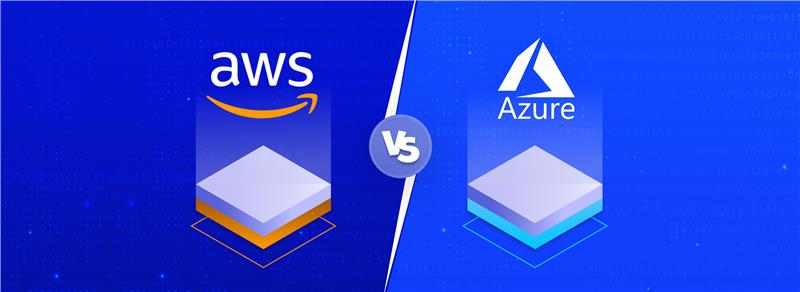
Only when the workload is genuinely unpredictable. For any steady-state application, provisioned instances are more cost-effective. Check our Azure vs AWS comparison to see how different providers handle these tiers.
RDS is a rigid cost. Unlike web servers, you can't just turn it off or use Spot instances easily. Proper governance means getting the architecture, Graviton and gp3,right from the start.
•
CTO•
Articles